Mark Jones, on Facebook yesterday:
"If our virtues were painted on our rear ends, and our faults on our faces, we'd put our underwear on our head and walk around naked."
Oh, the lengths to which we will go...
The PCA may do a good thing, with this overture:

https://notthebee.com/article/trans-activists-are-calling-for-more-blood-after-the-nashville-shooting-heres-how-christians-should-respond
What a week! Not only the Jesus Revolution in the theater, but then a music concert by a Nashville artist with hundreds of cheering fans!
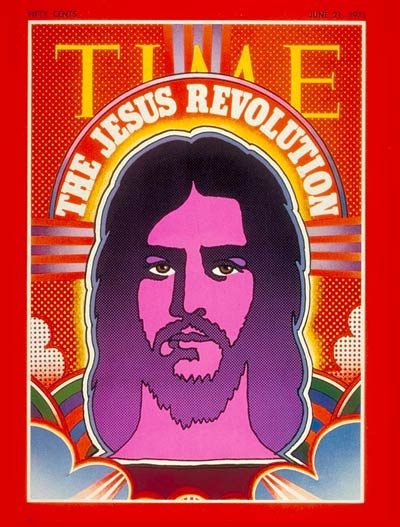
4 stars out of 5.
As far as I understand, the movie is historically accurate
to the times. The “Jesus people”
movement of the 70s was not just a copy-cat of the hippie movement, but was a
real spiritual awakening. The movie
contrasts Timothy O’Leary’s message of “turn on, tune in, drop out,” with the
Gospel message of forgiveness in Jesus Christ for your sins. Both messages are clearly shown, and the fruit
of them shown, too. Drugs lead to car
crashes and near- or actual-death. The
Gospel leads to new birth.
The doubts of all sides are shown well. Greg Laurie wondered if this religion was
just another new high that will pass.
Chuck Smith wondered if he would lose control in his church if he let
the hippies in. Lonnie thought God had
abandoned him when everything didn’t go how he wanted.
The message is very relevant today, as drugs continue to be
an escape for many – yet this path remains a dead end. When the stoner comes to the end of his rope,
the Gospel is still there for him. The
movie conveys the second chance everyone gets to receive grace, though they
have made a wreck of their lives.
Jesus Revolution shows the polarity between the younger,
immature, but vibrant, Spirit-filled faith, and the older, mature, but
calcified faith that needs shaking up. This
is a real thing. But as Hollywood will
do, it leans heavily in the direction that the former is absolutely better and
life-giving. This is not entirely wrong,
but the young need the old to mature as well.
The movie doesn’t portray that at all.
So no 5 stars. The megachurch has
been stuck ever since in immature mode.
The church needs to welcome in the immature, but insist that they grow
in the faith, and not stay the spiritual infants they often are.
I’d recommend Jesus Revolution for a few reasons:
1. A history lesson of the church in the last 50 years.
2. Evaluating how churches should present the Gospel to
various generations and ages.
3. Understanding the faults that all sides are prone to:
traditionalists, new believers, and unbelievers pursuing the truth in bad ways.
1. Kevin DeYoung has a good critique of reparations here.
2. Peter Lillback, president of Westminster Seminary in Philadelphia, has an excellent piece on the importance of public theology here. The seminary is seeing the need to train future pastors to have a developed theology of politics, and to tackle the rise (and I'd say current triumph) of cultural Marxism as the threat to Christianity that it is.
3. Just read this clear article defending the American Revolution. The four take-aways at the end are very good.
But I still have questions.
1. If colonial charters with the king were revoked in 1689, as the article says, how can the whole argument here hinge on those very charters establishing the colonies' relationship with the king, and not with parliament?
2. Didn't the king have the right to use parliament to administer his relationship with the colonies? Seems reasonable to me.
Where the rubber hits the road for me is this:
- Was there a principled problem that we were not being represented in Parliament, or that the king wouldn't hear us reasonably, while our rights were trampled upon? Did George violate Magna Carta-like common law in his treatment of the American colonies?
- Or was it that the colonists had to pay their fair share for the benefits of the empire, and just didn't like it - e.g., taxes to fund a war (French-Indian) that had benefitted them?
I lean toward the first.
Yet I'm suspicious of the strength of the argument that the colonies didn't have to listen to Parliament, only the king.
The better argument seems to be:
- taxation without representation
- rights trampled (harboring troops in homes, etc.)
- Magna Carta obligations the king has to his subjects' rights
https://crosspolitic.com/rebellion-to-tyrants-the-principles-behind-the-just-war-for-independence/
Just read this clear article defending the American Revolution. The four take-aways at the end are very good.
This is a decent, short exposition of 1 Timothy 2:15:
"Yet she will be saved through childbearing—if they continue in faith and love and holiness, with self-control."
Also good: analysis of Andy Stanley's comments on homosexuality in the church.
Thoughts on Mother Kirk, by Douglas Wilson - chapter 6 - The Lord’s Day
Summary of Wilson’s argument
Observing the Lord’s Day has gotten a bad rap from the
Puritan Sabbatarians, who frowned on napping, bike riding, or other
recreational activity on the Sabbath.
The original command was to rest from our normal work (Deut 5:12-15),
and to worship (Leviticus 23:3). Works
of necessity and mercy are also allowed, such as cooking meals and doing
someone a good turn (Mark 2:23-28; 3:2-5).
The Sabbatarian view that insists the whole day be involved with worship,
necessity and mercy neglects the foundational command of rest. But rest should be accompanied by worship, or
it comes to violate God’s purpose for the day (Isaiah 58).
It is hard to observe the Lord’s Day without doing so as a
people. We need to give each other rest,
and observe it together, for it to really “work.” This Old Testament command is like the tithe
or the call to apply sacramental signs to our children: it may be modified in
the New Testament, but we don’t need to find it restated in the New Testament
to believe the modern day Christian is called to it.
The Sabbath day was changed from Saturday to Sunday when
Jesus rose from the dead on Sunday, and then appeared to the disciples the
Sunday following (John 20:26). The early
continued to meet for worship on Sunday (Acts 20:7; 1 Cor. 16:2). Hebrews 4 makes the point that the Sabbath
has a creational aspect (the Father rested from His work) and a redemptive
aspect as well (the Son rested from His work after the cross).
Romans 14:5 and Colossians 2:16-17 are addressing annual and
monthly Old Testament feasts, not the Sabbath day. If they meant to say the weekly Sabbath day
is like every other day, it would contradict the verses above.
Don’t approach the Sabbath with a list of things you cannot
do. Focus on the basics of rest,
worship, necessity and mercy. Observe
the day such that your children desire the day, instead of dreading it. It should be more celebrative than funereal.
There remains a rest (Sabbath) for God’s people (Hebrews
4:9-10). “This is the day the LORD has
made” (Psalm 118:24) spoke of Sunday, the day Christ was risen from the dead. Sabbath portrays the Gospel, which gathers, relieves,
saves, restores, and feasts God’s people.
The day should do the same each week in our observing it.
We are set free as New Testament Christians from ritual
observance of the Old Testament law. But
the Sabbath was founded long before Moses, and continues as a principle for us
to endure.
Further thoughts of my own
Wilson is right that HOW we observe the day matters. Just as in all our obedience to God, Sunday
observance should be a “get to” not a “got to.”
A delight more than a duty, though it is both.
Wilson doesn’t mention this, but his argument contravenes
both the Westminster Confession and the Heidelberg Catechism at points regarding
the Sabbath. This is jarring to state
baldly, but it is a position to which most orthodox Presbyterians hold
today. Contra Westminster, the Sabbath
should involve basic rest and can involve recreation as well. Contra Heidelberg, there IS a day still set
aside for us to observe, regarding the Fourth Commandment and Leviticus 23.
Wilson skirts this issue, but part of Sabbath observance is
giving rest to others, particularly your servants. This is in BOTH versions of the Fourth Commandment
(Exodus 20:10; Deuteronomy 5:14). It is
explicit: “that your male and female servant may rest as well as you.” So don’t make the illegal immigrant who is
cleaning hotel rooms and bussing tables, work on Sundays. Most modern Christians feel free to eat out
or shop on Sundays, but doing so takes away rest from those who are
working. A society that observed the
Lord’s Day properly would have employers requiring Sunday work far less than we
do. Just as I would not encourage anyone
to blaspheme (3rd Commandment) or to dishonor their parents (5th
commandment), so I ought not do anything that encourages them to go to their
normal waitering job at the restaurant (4th commandment). Such work is not a work of necessity or
mercy, and often creates a schedule conflict with worship. The principle is to not do anything that
directly causes someone else to work a job on Sundays. The Sabbath should be oriented around the
church and the home, not the marketplace of gas stations, grocery stores or
restaurants.
The question is often raised of how to give rest to the
wife, who usually has extra work if eating out is not an option. First, the husband can find plenty of other ways
to give her rest: helping with the preparation, the cooking, and the dishes,
for example. The husband whose only
means of giving her rest is taking her out to eat needs to expand the ways in
which he serves and blesses his wife.
Also, the meal schedule can be adjusted, planning a simpler meal, or
leftovers, for Sundays. For wives who find
meal preparation a burden, this is quite important. Others who enjoy cooking may “do it up” on
Sundays.
I believe this to be a relative command, based
on Christ’s teaching on the Sabbath, when His disciples picked and ate grain,
and He taught in response to objections about David breaking ritual law under
necessity (Mark 2:23-28). There are
times the gas station is a necessity on the Lord’s Day. Most of the time, this is because you didn’t
adequately prepare the day before, but there are exceptions like vacations,
where it cannot be helped. God means the
day as rest, not keeping a list of don’ts.
You don’t have to sleep in your car or go hungry if you are far from
home on a Sunday. Sometimes the ox is in
a ditch, and work or shopping is needed.
But you should prepare as much as possible on Saturdays to observe Sunday
properly. Again, not so much as a list
of do’s and don’ts, but as time set aside to spend with the Lord. In days past, when we had more of a Christian
culture, much of Saturday was taken up with getting ready for Sunday. You did the work around the house so you didn’t
have to mess with it on Sundays.
On a date night with your wife, you may often think of an
errand to run in the store. But you
intentionally don’t do it, to keep the evening special with her. It can wait.
How much more should we set aside routine market activity on the Lord’s Day,
to spend it with Him and His people?
There is a plausible argument for the opposing position, allowing
market activity as on any other day of the week. So I do not treat this as a sin issue,
prosecuting people that practice differently, especially not as a pastor. But I do believe this to be the Biblical means
of observing the Lord’s Day.
And now, a guest post, by my daughter, Grace Hemmeke...
The church faces many fronts of battle.
This is in some ways reflective of the church’s state on earth – fractured,
schismatic, constantly on guard against “those who hate her and false sons in
her pale”. These distractions also show the cacophonous, chaotic nature of the church’s
opposition. It can be helpful then, to reorient ourselves from time to time,
remembering that we serve Jesus Christ in His commission to “make disciples of
all nations, baptizing them in the name of the Father and of the Son and of the
Holy Spirit…”
It can also be helpful to remember our
common enemy. Some sects of Christianity tend to avoid much mention of Satan or
of evil in general, reducing a Christian’s life to merely a relationship
growing in faith with God, while other’s explicitly renounce Satan at the time
of their baptism, along with all his works and all his pomp.
And sometimes, Satan himself reminds us
all that although he fell from heaven, he is now on our earth, going to and fro
and walking up and down it.
A few days ago, he did just that. The
Satanic Temple made the news with an announcement that they would be providing
chemical abortions within the state of New Mexico for those who are interested
in performing “The Satanic Temple’s abortion ritual”.
Now there are some Christian congregations
and clergy who hold a “modern” or progressive stance on abortion, endorsing it
in some cases and circumstances. Ignoring for a moment the commands from the
Bible such as, “You shall not murder”, these congregations and clergy now find
themselves agreeing with The Satanic Temple, at least on this issue. That might
be one of the most obvious and explicit theological red flags a church is ever
blessed with receiving, short of God speaking out of a cloud – of course, if
they were given the words of the prophets and didn’t believe them, why would
they listen to God…
Nevertheless, the willingness of The
Satanic Temple to provide abortion should serve as a wakeup call to American
churches. There is real and active opposition to Christ, and that Opposer is
willing to target the weakest and most vulnerable members of society in his
vindictive mission to destroy the image of God wherever he can.
It was interesting to me to note that the
abortion ritual which The Satanic Temple practices includes speaking aloud The
Satanic Temple’s third tenet: “One’s body is inviolable, subject to one’s own
will alone.” That reminded me of two quotes from Milton’s Paradise Lost,
which are both spoken by Satan shortly after his being cast down from heaven.
All is not lost—the unconquerable will,
And study of revenge, immortal hate,
And courage never to submit or yield:
And what is else not to be overcome?
Here we may reign secure; and, in my
choice,
To reign is worth ambition, though in
Hell:
Better to reign in Hell than serve in
Heaven.
Among those to whom Satan speaks are the
demons Moloch and Baal, who require infant sacrifice as part of their worship.
Today, secular culture might laugh at the idea of Moloch or Baal while
worshipping the very selfish ambitions which they embody. The Satanic Temple’s
third tenet is an obvious indicator of this. There is nothing more important
than one’s will and body and if people have to die in order for one to maintain
their autonomy, so be it.
Two brief counter examples: First, the
virgin Mary, mother of Jesus, who when told that she had been chosen by God to
become pregnant with His Son, said, “Behold the maidservant of Yahweh. Let it
be to me according to your word.”
Second: that Son, Jesus, who went to his
death so that we could stand face to face in God’s presence, justified and
redeemed from every sin. He died knowing every pain that he would suffer, with
every power to call down a legion of angels and save himself, but he asked God
only: “Father, if it is Your will, take this cup away from Me; nevertheless not
My will, but Yours, be done.”
The selfishness of Satan bred his eternal
damnation and his unrelenting war on God’s people and God’s image. He now
unabashedly sends his followers to help others in their destructive selfishness
under the guise of bodily autonomy without regard for those around them. Satan
is not trying to hide in our society.
Neither should the church. We have a
better advocate in heaven than any worldly satanic cultist or selfish secular
agnostic does (and ours is still in heaven, by the way). We should continue to
oppose Satan, and all his works, which now explicitly include abortion. One
benefit of living in an increasingly depraved world is that the church’s work
becomes increasingly clearer. The church should, in light of the Satanic
Temple’s actions, have renewed unity and total opposition to any pro-abortion
measures or concessions.
Outside of the Bible, this is the clearest
indication the world will give to the church that abortion is immoral. Both the
repeated biblical exhortations to uphold innocent life and this latest
rejection of God’s creative prerogative should spur the church to a universal
rejection of abortion and the satanic selfishness it stems from.
This is a decent article on what it means to fear God, and how it impacts cultures and markets generally.
A solid take on Romans 13 at Tabletalk.
Here's a funny take by Alistair Begg on how churches treat their pastors.
It's tongue in cheek. Some churches are this mean, but few.
Pastor, the church will, in year...
1 – idolize you
2 – criticize you
3 – ostracize you
4 – liquidize you – squeeze all the juice out of you!
5 – tyrannize you
6 – analyze you
7 – paralyze you
8 – fossilize you
9 – stigmatize you
10 – re-galvanize you
11 – memorialize you


