Our family is on vacation for the next week, so you won't hear much from us.
I hope our vast readership isn't too disappointed. Ha!
1.31.2006


A question
This is a question I would ask of many in our classis and denomination right now, with the same tone and context and "apology."
Preach at 'em...
"One of the first rules of preaching is that you must never use the pulpit to settle personal scores. But another rule of preaching, just as important, is that you must never squander your time in the pulpit by thundering away at sins that never make their appearance in the lives of those gathered in front of you." - Doug Wilson
1.30.2006
Positively Medieval
Subtitled, more thoughts on art from the right brain of the family.
So I finally finished this one.
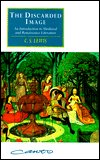
The Discarded Image, by CS Lewis. An Introduction to Medieval and Renaissance Literature.
This was one of the last books Lewis wrote, and few people know he was a literary critic by trade, not a theologian.
I didn't understand 80% of the literary references to Medieval works, because I'm not all that well-read in the stuff. But I could usually infer the main points. Here are a couple highlights:
"If you had asked... Chaucer 'Why do you not make up a brand-new story of your own?' I think they might have replied (in effect) 'Surely we are not yet reduced to that?' Spin something out of one's own head when the world teems with so many noble deeds, wholesome examples, pitiful tragedies, strange adventures, and merry jests which have never yet been set forth quite so well as they deserve?... Why make things for oneself... when there [are] riches all about you to be had for the taking? The modern artist often does not think the riches [are] there" (pg 211).
"Between Chaucer's time and [Alexander Pope's] the arts had become conscious of what is now regarded as their true status. Since his time they have become even more so. One almost foresees the day when they may be conscious of little else.... A chef, a surgeon, or a scholar, may be proud, even to arrogance, of his skill; but his skill is confessedly the means to an end beyond itself, and the status of the skill depends wholly on the dignity or necessity of that end... Literature exists to teach what is useful, to honour what deserves honour, to appreciate what is delightful."
So I finally finished this one.

The Discarded Image, by CS Lewis. An Introduction to Medieval and Renaissance Literature.
This was one of the last books Lewis wrote, and few people know he was a literary critic by trade, not a theologian.
I didn't understand 80% of the literary references to Medieval works, because I'm not all that well-read in the stuff. But I could usually infer the main points. Here are a couple highlights:
"If you had asked... Chaucer 'Why do you not make up a brand-new story of your own?' I think they might have replied (in effect) 'Surely we are not yet reduced to that?' Spin something out of one's own head when the world teems with so many noble deeds, wholesome examples, pitiful tragedies, strange adventures, and merry jests which have never yet been set forth quite so well as they deserve?... Why make things for oneself... when there [are] riches all about you to be had for the taking? The modern artist often does not think the riches [are] there" (pg 211).
"Between Chaucer's time and [Alexander Pope's] the arts had become conscious of what is now regarded as their true status. Since his time they have become even more so. One almost foresees the day when they may be conscious of little else.... A chef, a surgeon, or a scholar, may be proud, even to arrogance, of his skill; but his skill is confessedly the means to an end beyond itself, and the status of the skill depends wholly on the dignity or necessity of that end... Literature exists to teach what is useful, to honour what deserves honour, to appreciate what is delightful."
1.26.2006
Egg Head
I've had chicken on the brain a lot lately - mostly hens and chicks, but nothing cute and fuzzy. More like a really ticked off hen ready to peck out some eyes, like a duck's eyes. What does an angry chicken look like? Can a chicken be fierce if, in fact, it is "chicken?" Do steroid-pumped chickens have any role in this?
I started thinking about all the other chicken related things our culture has cooked up- movies like "Chicken Little" and "Chicken Run," Kenny Roger's Roasters and Kramer yelling "Baaaaad chicken! Mess you up!" on Seinfeld, the country singing group Dixie Chicks, Foghorn Leghorn, the term "chicks" as applied to female humans, even knitting (!) - "chix with stix". I even bought a whole chicken to cook, a first for me.
All this is stewing in my brain with the intention of visual creative output. I'll post the results in a couple of weeks... until then I'm going to have some really odd dreams!
-Sara
Jesus and Gentiles
Matthew 15:21-31 confuses me.
Jesus says He isn't sent to any people except Israel (vs 24).
But then He goes to the Decapolis, a pre-dominantly Gentile region (vs 29) and heals many there.
Huh?
My best guess is that Jesus was testing the woman in vss 22-26, to see just how "poor in spirit" she really was. After all, God says it's too small a thing to just go to Israel - He's going to send His Messiah to be a light to the Gentiles, too (Isa 49:6).
But the woman apparently knows Israel's history quite well and places herself within it, as an outcast not deserving grace (2 Samuel 9:8-10).
Paul seems to be following his Master when he says salvation is to the Jew first and also for the Greek (Rom 1:16-17). Jesus doesn't gloss over that salvation is of the Jews (John 4:22). He is the Jew we Gentiles cling to for salvation (Zech 8:23).
Living with unbelievers
Genesis 26 has some good teaching on this.
1. Our relationship with others is always through God-colored glasses. God makes promises to Isaac to obtain this land, as he moves in with the Philistines.
2. We can try to help those promises along in unhelpful ways, through less-than-honest dealings with unbelievers. This doesn't work. Isaac gets in trouble - is even convicted by the Philistines for what he does.
3. It is God's material blessing that makes a big difference. The first reaction of the unbelievers is envy and harassment. They stop up the wells he digs and evict him from their land. Like Aquila and Priscilla and the others Jews evicted from Rome at one point. Like the Jews' businesses repressed and then looted.
4. Isaac's response is forbearance. He doesn't appeal to a higher civil authority (if there was one). He doesn't go to war, even though he is mightier than they. He keeps working, letting them take advantage of him until they leave him alone.
5. The second response of unbelievers is acknowledgement of Isaac's right to be there. They come to make an alliance with him, so he won't hurt them! And he agrees.
The promise has begun to come true. The Philistines who own the land have acknowledged Abraham's son's right to be there.
This is a goldmine for how we should be relating to the world, contrasted with how evangelical Christians often actually do so. More on that another time perhaps.
1.25.2006
Clear pastors wanted
With a classis meeting coming up to decide what to do about homosexuality and the RCA's response to it, and after talking with a friend from here about it last night, I thought I'd lay all my cards on the table ahead of time, even if it gets some of my pastor friends hopping mad. Here's what I think, perhaps not going quite as far as this author does on the end point of all this...
Sermon in process
From Zechariah 7
You’re feeling bad because they’re trying to take the 10 commandments off of court buildings? You should feel worse about the disobedience of the last 50 or 100 years that has led to that mindset. Deal with the mindset in people’s hearts; then you won’t have to fight it out in Congress and in court.
People were asking Zechariah if they should still be fasting for the destruction of the temple when they were building a new one. The response: you should be bemoaning the disobedience of your fathers that led to the temple's destruction.
It's sort of like treating your kids disrespectfully and hypocritically for 15 years and then weeping and wailing when they don't respect you. What did you expect?
Or, like our 1-year old who angrily throws his food on the floor and then cries that he doesn't have any food. Like God, parents don't have much respect for that kind of wailing.
China's government goons
This just in from Voice of the Martyrs:
"Gao Zhisheng, a prominent lawyer who had his legal license suspended by Chinese authorities for representing religious rights, faced an attempt on his life January 17th. China Aid Association reported Gao was traveling in Beijing when a vehicle with an obscured license plate suddenly stopped in front of him. He narrowly missed hitting the vehicle, stopped and got out to investigate. The driver of the other car then attempted to run down Gao, but he was able to dodge out of the path of the vehicle. As the car sped away, the newspaper covering the license plate blew away and the plate number was reported. It is believed the driver was a security agent of the Chinese government. Throughout the incident, a military vehicle was observing nearby."
"Gao Zhisheng, a prominent lawyer who had his legal license suspended by Chinese authorities for representing religious rights, faced an attempt on his life January 17th. China Aid Association reported Gao was traveling in Beijing when a vehicle with an obscured license plate suddenly stopped in front of him. He narrowly missed hitting the vehicle, stopped and got out to investigate. The driver of the other car then attempted to run down Gao, but he was able to dodge out of the path of the vehicle. As the car sped away, the newspaper covering the license plate blew away and the plate number was reported. It is believed the driver was a security agent of the Chinese government. Throughout the incident, a military vehicle was observing nearby."
1.24.2006
History and heart
Quick, who was the first President of the United States? Nope. You're wrong.
I listened to an excellent talk by George Grant last night on education.
He laments having been educated so poorly that he didn't even know who the 1st President of the United States was. Everybody knows it was Peyton Randolph, right? Huh? I didn't know, either. I didn't know MOST of the names of the next 14 presidents, from 1774 to 1789.
As Grant recounted some of their amazing stories (Henry Middleton, John Hancock, Henry Laurens, John Jay, Samuel HUntington, Thomas McKeene, John Hanson, Thomas Miflin, Richard Henry Lee, Arthur St. Clair, and others), I realized that nobody ever got around to telling me this stuff. These aren't just the Declaration signers who had their property, family and lives on the line during the war. These are the guys who plunged into the war, and slugged it out against the world superpower, trying to coordinate a dozen independent colonies into some semblance of an army to support their determination to be rid of the tyranny of King George.
Okay, to be fair, George Washington is the 1st President, under our current Constitution. But wasn't the country born in 1776? What happened in those 13 years before our Constitution was adopted, anyway?
If your curiosity is piqued, the Grant link above will take you to his blog. The Jan 23, 2006 entry will describe for you the man George Washington called the father of our country.
1.23.2006
Boring preachers
Internet Monk:
"First... the Biblical story is going to be boring to those who are not spiritually enlivened to its truth. This is expected. It is a given. Second, as proclaimers of the Gospel, we should use legitimate measures and means to make message as interesting as possible without obscuring either the Biblical message or rejecting the Biblical method.
"In other words, while the Gospel isn’t entertainment, a boring preacher is probably a lazy preacher or a stubborn preacher. It may be unavoidable to bore the audience in some measure, but it is not something that should be accepted without doing all we can to make what we do say clear, urgent, genuine, personal and real. Work at not being boring, but don’t go off the deep end trying to avoid it....
"The entertainment culture in which we live cannot become the standard for what is good preaching. Jesus was a master communicator, but he didn’t try to outdo the theater productions at Sepphoris. In the same way, we should refuse to compete with the secular entertainment media for the attention of people. “He who has ears to hear, let him hear.” “If they refuse to hear you, shake the dust off your feet and move on.” These are the words of Jesus....
"We live in a culture that finds everything boring eventually. The Gospel is timeless, not entertaining. It is true, not trendy. It has depth, not just overnight ratings. It is God’s word to all of us, told in the story of Jesus. While sermons will always be boring to someone, we dare not find that God has been bored with our attempts to become entertainers rather than heralds and proclaimers."
1.19.2006
Hollywood bias
World Magazine reports on the movie world, that compared to Narnia's $264M gross, it was Brokeback's $33M-gross that took 4 Golden Globes this week.
Now, I'm willing to grant, not having seen Brokeback, that its cinematography is probably better quality. Narnia's wasn't stellar, but did dress the story well.
My concern is the ideology fueling the world's award system.
Now, I'm willing to grant, not having seen Brokeback, that its cinematography is probably better quality. Narnia's wasn't stellar, but did dress the story well.
My concern is the ideology fueling the world's award system.
All the Difference
Studying to preach on the Beatitudes, I went to D. Martin Lloyd-Jones and found a goldmine. Matthew 5:1-12 shows up the stark contrast between the follower of Jesus and the rest of the world.
"As I see things at the present time [1950s], the first need in the Church is a clear understanding of this essential difference. It has become blurred; the world has come into the Church and the Church has become worldly....
"We have been told that we have to make the Church attractive to the man outside, and the idea is to become as much like him as we can.... Some people thought that, as a result... men would be crowding into the churches. Yet it did not happen, and it never has happened that way. The glory of the gospel is that when the Church is absolutely differnt from the world, she invariably attracts it....
"It should not be our ambition to be as much like everybody else as we can, though we happen to be Christian, but rather to be as different from everybody who is not a Christian as we can possibly be. Our ambition should be to be like Christ... and the more like Him we become, the more we shall be unlike everybody who is not a Christian."
1.18.2006
Sin in the Church
Sorry for the many quotes... couldn't resist this one.
"All communities have to deal with the reality of sin -- and for churches this would include the sins that might occur anywhere, whether sin in the leadership, sin in the congregation, sin in the choir, or sin in the youth group. This would include sins of browbeating and tyranny from the leadership and backbiting and false accusation against the leadership. Things can go wrong anywhere. Because of this, Christian communities have been given the tools to deal with sin. When a body does not have the means of fighting off sin (moral infection) that particular body has AIDS. The immune system is shot. This was why discipline was so important to the Reformers."
"All communities have to deal with the reality of sin -- and for churches this would include the sins that might occur anywhere, whether sin in the leadership, sin in the congregation, sin in the choir, or sin in the youth group. This would include sins of browbeating and tyranny from the leadership and backbiting and false accusation against the leadership. Things can go wrong anywhere. Because of this, Christian communities have been given the tools to deal with sin. When a body does not have the means of fighting off sin (moral infection) that particular body has AIDS. The immune system is shot. This was why discipline was so important to the Reformers."
Subscribe to:
Posts (Atom)