Showing posts with label Books. Show all posts

7.25.2026

Theo of Golden - a review

Theo of GoldenTheo of Golden by Allen Levi
My rating: 4 of 5 stars

This book was astoundingly good.

It feels “squishy liberal” at several points, but is actually deep with solid Christian theology under the surface. Communion and Incarnation especially. The emphasis is on beauty and the dignity of each person, reflected in their faces in their portraits. Most people just don’t bother to look – really look – at faces and people. A few would even rather smash them.

Theo (“God” in Greek) would rather encourage the dignity and saintly capabilities in every person. He draws out everyone’s deepest joys and hurts and their life stories as he encounters them, by listening well, and asking the right questions at the right time. I found myself thinking often that he is the ideal pastor.

I think one of the main themes is this:
Focus on the other person, not yourself. Get to know them. Love them. Meet their needs however you can. Encourage their potential. Show up for them.

Few of us do this well, me included. Be we can all learn gently how to do better from a story like this.

Theo is a slow-pace kind of story. Be patient with it. Absorb each person’s life – that’s the whole point. If you can’t take the time to let someone else in, you won’t have the time for this book, either. But you need to learn to do so.

4 stars.

View all my reviews

5.18.2026

The Death of the West - Pat Buchanan - a review

Death Of The WestDeath Of The West by Patrick J. Buchanan
My rating: 3 of 5 stars

Written back in 2002, as something of a screed against George W. Bush’s policies (against whom he ran in the primary, I believe), I agreed with about 90% of what Buchanan wrote.

His basic thesis is that the West needs recovering and preserving, and that is a cultural war, not an economic one. Republicans today love to fight economic battles, but are less willing to fight cultural ones. With the rise of Trump/Vance today, this tide is turning somewhat, but it remains primarily focused on the economic interest of America, not a battle for its cultural soul. Conservative/GOP politicians are mostly AWOL in the cultural war. Today, for example, everyone knows that if Mifepristone and other chemical abortions were outlawed, there’d be a political furor and uproar, so Trump doesn’t touch it (or let his FDA touch it).


Areas I disagreed with Buchanan:
He basically has a “keep the foreigners out” mentality, believing they inherently degrade Western culture. There is some truth to this (witness recent Somali fraud), but it’s not automatic. I’ve known several immigrants/minorities who have contributed greatly to America, both culturally and economically. I’d hate for the Right to become essentially nativist, which I fear is happening.

Population is destiny, Buchanan says. Whoever has the most babies, wins. Again, this is partly true, but not automatic. We certainly have a plague of American women refusing to have children, and that will eventually lead to a demographic winter for us. But plenty of devout Christians are having many children, and to be hard-nosed about it, those are the ones we want multiplying, anyway. I found his concern that Palestinian fertility rates are slightly higher than Israel’s, as particularly strange. You can’t boil a culture war winner down to the highest fertility rate.

Buchanan bifurcates between economic and social issues. Paraphrase: “We shouldn’t be pursuing economic liberty and global free trade, but instead shoring up America and its values.” A global economy is bad for America, essentially, is his view. This view has prevailed in the Trump/Vance administration. And it IS a problem when American IT workers demand $65/hour, but Indian immigrants will come in and do it for $40. But I’m not sure the best solution to that is an essentially fascist policy, where the government dictates to private companies what they must do and who they must hire. The issue is that INS doesn’t have the resources to discern if those seeking entry are willing to assimilate to American culture, and not undercut American jobs but enhance our economy, instead. We want to bring in the best and brightest, not those who will steal our jobs for low pay.

Overall, this was a helpfully bracing book on the need to fight the cultural war, with a few concerning notes.

View all my reviews

5.16.2026

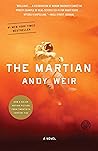
The Martian - a review

The MartianThe Martian by Andy Weir
My rating: 2 of 5 stars

I thoroughly enjoyed this movie and have watched it several times. Then I saw Project Hail Mary and was also impressed. So I read the book Hail Mary and now read the Martian.

Both books are heavy on the science and physics, which isn’t my thing at all, but I stuck with it. The main theme isn’t really science, but enduring and solving problems to survive. It’s as much a psychological “OK, I can do this,” when faced with your own death, or the extinction of your whole species.

There’s a LOT of bad language in the Martian, and several sexual references. It starts with the first three sentences of the book. This is not for kids.

The benefit of the book is in conveying the human spirit’s desire and ability to survive against overwhelming odds. “Okay, I’ll need oxygen there for the next 2 months – how am I going to do that?” Times fifty. Until you get home.

Also, the human connection between people. Although Watney is on MARS, alone, for crying out loud, there is a strong bond with his crew returning to earth, and with NASA back on earth. He consumes crewmate Johannsen’s disco music and seventies TV shows. He constantly tells the crew it wasn’t their fault they left him on Mars. Even when they lose contact for several weeks, NASA and Watney are thinking of each other, and how each could help the other.

As with most modern books, my usual slogan is reversed. The movie is better than the book.
2 stars.

View all my reviews

4.30.2026

The Importance of Being Ernest - a book review


The Importance of Being EarnestThe Importance of Being Earnest by Oscar Wilde
My rating: 3 of 5 stars

As my wife designs a logo for a community theater staging this soon, I thought I’d give it a quick reread.

Yikes!

Wilde specializes in one-liners and witticisms, and often has characters say absurd and contradictory things, which they mean quite “earnestly.” That’s the surface level silliness of the play.

The next level down, is the Shakespearean plot of mistaken identities and mixups – done quite well.
Here we also find the typical clash between social convention and personal romance.

I think the deepest level message is that one should not pretend to be someone or something other than who you are. It is important to discover and be earnest. This sounds good, but Wilde meant it - and the world has taken it – to very bad places. Sincerity OVER all else: external morality, sacrificial love, the fruit of the Spirit. None of that matters. Being true to yourself is everything. Disregard and hold in contempt anything else that one might seek to impose upon you. To not be and do what you feel is the ultimate blasphemy, for we have made our own feelings and opinions our idols.


View all my reviews

4.20.2026

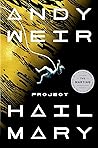
Project Hail Mary - a book review


Project Hail MaryProject Hail Mary by Andy Weir
My rating: 3 of 5 stars

I saw this Science Fiction movie on opening night in the theater (never saw a movie on opening day before).
I read the book after watching the movie (seldom do that, either).

Weir also wrote The Martian, which is a favorite movie of mine.

His forte/theme is fortitude in difficult situations, scientific problem solving, realizing your mistakes, and receiving help from unlikely sources.

When scientists discover the sun is being eaten and cooled by alien microbes, leading to climate catastrophe in 30 years, the nations of the world launch a coordinated mission to a nearby star that isn’t dying, to figure out why and send a solution back to Earth. The main character, Ryland Grace, is an academically ostracized scientist, now junior high science teacher, who is drafted against his will to work on the mission and be one of the three crew members.

The two coolest things about the story:
1. Grace wakes up at the beginning with coma-induced amnesia after years of interstellar space travel. His two crewmates are dead. He is alone, and has to figure out what he’s supposed to do and who he is. He gradually recovers his memory (including his name, about 100 pages in!), and figures it out.

2. Grace encounters and befriends an alien seeking the same solution Grace is. Their relationship becomes the heart of the story.

Besides being heavily evolution- and old-earth-based, and a handful of swear words, there’s little objectionable in the story, and worth seeing/reading with 12 year olds and up. (Weir actually subs out mild words for swear words more often than he uses vulgarity.)

Going to great lengths to help a new, strange friend becomes the main theme. Earth needs the Eridian alien, and Erid needs the human Grace. If they don’t work together, two planets die.

Great story!

View all my reviews

1.02.2026

Propaganda Girls - a Review

Propaganda Girls: The Secret War of the Women in the OSSPropaganda Girls: The Secret War of the Women in the OSS by Lisa Rogak
My rating: 3 of 5 stars

This book tells the tale of four restless women who wanted to help the war effort in World War II. Each brought unique gifts to the table: a Hollywood star and singer, intimate knowledge of Japanese culture and language, a gift for putting German soldiers at ease during questioning, etc.

The basic point is that they engaged in “black propaganda.” Leaflets, radio spots, etc, designed to demoralize the enemy. They would rewrite popular songs with lyrics that hinted that the war wasn’t worth it. Write short blurbs that drove a wedge between Japanese officers and soldiers. Announce to the Germans that Hitler was overthrown and they might as well surrender. Suggest that soldiers’ wives/girls were lonely back home and finding someone else to love them.

These tactics moved thousands of the enemy to surrender, waving the propaganda that these women wrote as they approached Allied forces in surrender. These women worked for the OSS, the precursor to the CIA.

The book has a lot of feminist insertions, constantly reminding the reader that the women worked way harder than the men, and got paid a fraction of what the men did. They were seldom promoted, being expected to go back home when the war was over. I’m sure there is some truth to the injustice of this, but it’s harped on repeatedly.

The immorality of the women and the Allies in general is only hinted at. But when you read between the lines it is quite atrocious. Most of them were divorced multiple times, one was a cabaret singer – the first to kiss another woman on the silver screen. This is all spun as “war is hard on marriage and love,” but they made poor choices along the way.

Still, a worth-while historical read. 3 stars.

View all my reviews

12.13.2025

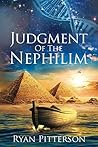
Judgment of the Nephilim - a Review

Judgment Of The NephilimJudgment Of The Nephilim by Ryan Pitterson
My rating: 2 of 5 stars

This book was recommended by Doug Wilson a year or 2 ago, but it's pretty terrible.

While I'm open to the assertion that the "Sons of God" in Genesis 6:4 were angels, Pitterson's argument relies largely on apocryphal works and overly literalistic readings of prophecy that are a stretch, and sometimes laughable.

The "book" God wrote for us in Psalm 139:14 is DNA.

The vision of Zechariah 5:9 of two women proves there are female angels.

Sorry, but no.

Pitterson does make some good exegetical points for his position in the first 100 pages, but it's so riddled with special pleading and stretches, that I only got 1/3 of the way through, and put it down.

View all my reviews

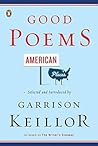
Good Poems - a review

Good Poems, American PlacesGood Poems, American Places by Garrison Keillor
My rating: 1 of 5 stars

This book would better be titled "Mediocre Poems."
I got halfway through it, but gave up.
One in every 50 is pretty good, but else it's not worth the time.

View all my reviews

10.19.2025

Undaunted Courage - a book review - Lewis and Clark


Undaunted Courage: Meriwether Lewis, Thomas Jefferson, and the Opening of the American WestUndaunted Courage: Meriwether Lewis, Thomas Jefferson, and the Opening of the American West by Stephen E. Ambrose
My rating: 4 of 5 stars

A quintessentially American enterprise I knew nothing about, and learned a great deal.

Lewis was an elite Virginia landowner in Jefferson’s social circle. When Jefferson came to the presidency he made Lewis his personal secretary. He was a very close confidant for years. The Louisiana purchase from Napoleon was in the works for years, but not a certainty. For 2 years, Jefferson trained Lewis in celestial navigation, botany, etc., and prepared an expedition to explore the continent to the Pacific, especially seeking a river / water route up the Missouri River over the Rockies to the Pacific. The goal was mainly to take the fur trade away from the British/Canadian Northwest company.

They planned the trip for 2 years, knowing the territory was not American. Parts of it were British, parts Spanish. But they simply assumed it would be American soon, and were going to explore it as if it were theirs, anyway. Jefferson tutored Lewis privately in the natural arts for months, while he was president. The day before Lewis left, they got word from Napoleon confirming he would sell “the Louisiana territory” to America.

Clark was an army buddy of Lewis, very trusted and respected. Although officially not a peer in rank with Lewis, Lewis treated him as such, giving him equal say in all decisions on the expedition. Typical lore is that it was Lewis, Clark, and Sacagawea on the trip, but they actually spent a lot of time recruiting a team of men – between 30-50 – and built a large riverboat and several canoes for the journey. Lewis was a fabulous leader of men, building immense loyalty among his team. At a few points they all thought they should take route A, but Lewis and Clark believed in route B, and the men followed. While they paddled canoes, Lewis wrote his journal, taking notes on many new plants and animals unknown to Western science until then.

Lewis and Clark were both slave owners, and Clark had a black slave York with him the whole time. They treated each Indian tribe they met in a rather patronizing manner – they had a new great Father now in Washington. They were his children, now, and should send their chiefs to meet him. They seldom gave out rifles though the Indians grabbed for all the gifts they would give. The Indians often hounded and stole from the expedition along the way.

The abundance of buffalo around present day Kansas made the land seem a Garden of Eden to them. They feasted on buffalo for weeks. Later in the Rockies, they had to eat horses and dogs, nearly starving.

Crossing the Rocky Mountains was especially tricky. They had to trade with Indians for horses, hire them as guides, and leave their canoes and supplies behind. They made it through an arduous journey to the Colombia river, where they built canoes again, and floated down the river to the Pacific. Some Indians were friendly, others were hostile.

Lewis advised Jefferson on trade policy from the Pacific Ocean. The expedition wasn’t just exploratory, but designed to decide how America could best take trade from the Canadian/British and French. Given the difficult Rocky crossing, the hostile Sioux tribe along the Missouri, and the abundance of furs west of the Rockies, Lewis advised trading with China. He was the scout and forerunner of American westward expansion.

On the way back, a friendly tribe told him not to attempt to cross the Rockies until late June, but Lewis didn’t want to wait. He made the attempt but had to turn back – the Indians were right. 12 feet of snow kept them from finding the trail they needed. They hired 5 teenaged Indians as guides who knew exactly where there would be grass for their horses, each step of the way, every day. Sacagawea as translator and guide – taken as a slave-wife to a French trader from a Western tribe – and such Indians get little credit in Lewis’ journals, but they would not have survived without them.

They fended off grizzly bears, wolves, and snakes, with nothing more than rifles with one shot per minute or two. One shot to a grizzly seldom took it down, and they had to run for their lives as the bear chased them.

The end of the story is the most fascinating. Getting back to civilization at St. Louis, they were heroes, treated to balls and dances as they made their way back to Washington. Everyone was eager for Lewis’ journal to be published, but he delayed and never got it done. (It wasn’t published until decades later.) Many of his actual samples of plants and animals he sent back to Jefferson were lost, but not all. He was made an honorary member of the Philadelphia naturalist society.

Jefferson as president appointed Lewis governor of the Louisiana territory, but he was a poor politician. Lewis got greedy, insisting only he publish journals of the expedition, but stalling in getting his published. He fell to heavy drinking and drug use. While Clark courted and married back in Virginia, Lewis caroused in Philadelphia, when he should have been governing in St. Louis. When he finally got to St. Louis, he was heavy handed with the hostile Indians, and insisted on government funds for a lot of things, which he had always gotten from Jefferson. When James Madison was elected president he started his way to Washington to report to him. Madison was far less willing to approve funds for Lewis’ projects.

Halfway to Washington in 1809, at the age of 35, Lewis committed suicide in a drug induced frenzy. He left many debts, personal and public, with his unpublished journal of the expedition in a corner of his room. Jefferson coined the phrase to describe Lewis at the end: “courage undaunted.” But Lewis’ expeditionary exploits and exertions definitely daunted him in the end.

View all my reviews
8.31.2025

The Wizard of Oz - book review

The Wonderful Wizard of Oz (Oz, #1)The Wonderful Wizard of Oz by L. Frank Baum
My rating: 2 of 5 stars

With my wife trying out for a part in this play soon, I got interested, and read the book and watched the movie at the same time. The book was published in 1900 and the movie in 1939.

A positive take: the movie was a hit during the depression, encouraging people to face the reality of a hard life. You can escape to fantasyland, Oz, for a while, but there’s no place like home – black and white Kansas - and you should want to be there, even if it’s hard. The movie’s premiere of technicolor was a dramatic demonstration of this. Going from black and white Kansas to technicolor Oz was a striking cinematic first. But Dorothy longed for black-and-white Kansas in the end.

A more cynical, and I think realistic take: this is an insidious story. The plot is an inversion of Pilgrim’s Progress. Instead of Christian’s hopeful journey to the Celestial City, where all hopes are fulfilled, Dorothy finds her hopes in the Wizard at the Emerald City dashed. Her faith winds up in her companions, not in the God who inhabits the city she journeys toward. He is an illusion, a sheister, a conman. The scarecrow wanted brains from the Wizard, but always had them. The Tinman wanted a heart, but had one all along. The lion sought courage from the wizard, but had it himself all along. We don’t need God to give us these things – we can find it within ourselves.

In the movie, the same good witch who sends Dorothy on her journey knew from the beginning how she could get home. But without the journey she wouldn’t have helped her companions discover their own inner strengths. The trek to the Emerald City wasn’t for any value in the destination, but to discover what they could learn about how they themselves were strong. This is the exact opposite of the Christian message of Pilgrim’s Progress, where we learn our weakness, and God’s power to give us strength for the journey beyond ourselves. The modern cliché that the journey is the thing, not the destination, comes from this, and it is WRONG. The destination in God’s Celestial City is the main thing, though He certainly teaches us much along the journey.

In the book, the good witch at the end serves as a sort of just and merciful God, sending Dorothy home, and sending each of her companions to their lands to rule. There is a subtle hint of dominion: as the lion, scarecrow, and tinman will rule their lands, Dorothy is sent home to her beloved Kansas, to take dominion there by loving and being content in it.

But the message in the end is a strong rebuke of escapism. Don’t long for a fantasy land like Oz – hoping in a Wizard to give you what you want is pointless. You need to look within to meet your hopes, not somewhere over the rainbow. This became the gold standard of 20th century pop psychology, and is a perversion of the Christian message.

View all my reviews

7.04.2025

Planet Narnia - a review

Planet Narnia: The Seven Heavens in the Imagination of C.S. LewisPlanet Narnia: The Seven Heavens in the Imagination of C.S. Lewis by Michael Ward
My rating: 4 of 5 stars

I’ve been immersed in Narnia for the past few months.

Finally got around to Michael Ward’s “Planet Narnia” which is a richly rewarding read. Halfway through the first chapter, I decided to reread each book he covered, chapter by chapter, and that turned out to be a GREAT idea.

Ward’s thesis is that each of the 7 Narnia books is under one of the 7 medieval planets, taking up all the mythology with it. Since Lewis was such a Medieval scholar, and reading Ward and Narnia again, I’m convinced he is right.

For instance, The Lion, the Witch and the Wardrobe is under Jupiter, the god Jove. Peter, the eldest, says “By Jove” a lot. Jupiter is the god of turning winter to spring, sorrow to joy, death to life. Aslan does this throughout the story in multiple ways.

Prince Caspian is under Mars, the god of war. There is lots of martial imagery. Mars is god of the trees, and weapons and both play a significant role in the book.

Ward’s book is less accessible to the normal reader at points, but it’s still worth it. He brings in Lewis’ other writings – the Space Trilogy, Miracles, etc. – to reinforce his points, but there’s a lot of Latin and French I didn’t understand. His argument is quite sound, though.

What I found most fascinating is that each of the books displays a different perspective of Aslan as the Lord Jesus Christ. He brings joy (LWW), He is a military victor (Prince Caspian), He is the creator (Magician’s Nephew), etc. Reading Narnia and Ward together gave me a richer picture of Jesus Himself and it’s glorious.

View all my reviews

3.31.2025

Saving Leonardo - a Review

Saving Leonardo: A Call to Resist the Secular Assault on Mind, Morals, and MeaningSaving Leonardo: A Call to Resist the Secular Assault on Mind, Morals, and Meaning by Nancy R. Pearcey
My rating: 4 of 5 stars

I’ve long had a soft spot in my heart for the arts. My wife is a painter and art historian. I love literature and novels. So any book merging Christian worldview with the arts, in the way Francis Schaeffer did in “How Now Shall We Live?” gets high marks in my book.

Pearcey walks us through the philosophical history that led to the art and literature movements of the past 2000 years. The secular/sacred dichotomy, fact/value divide is insidious and deeply unbiblical. Her take on the last 150 years of modern art history is particularly insightful, and not always negative.

Her conclusion is excellent. The church needs to support Christian artists, not only denounce the ungodly secular ones, and certainly not support the pop Christian kitsch. If the church is to incarnate the Gospel, it needs to do so in its communal life together, but also in story and picture.

This is more a college textbook than a popular read, but I commend it to every thinking Christian. 4 stars.

View all my reviews

Watership Down - a Review


Watership Down (Watership Down, #1)Watership Down by Richard Adams
My rating: 3 of 5 stars

I’ve had this book for years. My kids read it way before I did. I finally got around to it.

Adams is a GREAT storyteller. He knows how to slow the pace for dramatic effect at the cliffhanger points. He can tell a story within a story, even 3 or 4 layers down.

The rabbit warren of Efrafa was clearly modeled after totalitarian states, while Hazel’s community was free and open. (He wrote in the early 1970s). No one was allowed to leave Efrafa and the feedings were strictly regimented. Fertility was almost nonexistent as a result. Hazel’s band, on the other hand, left a warren about to be destroyed by human development (a common 1970s theme). They have a sort of exodus, crossing a river, and a desert, and finding their way to a new promised land on Watership Down.

But the Egyptians pursue. And Adams keeps it suspenseful till the end who was going to win. Would it be Orwell’s 1984 at the end, where the jackboot is successfully applied to the protagonist, who is forced to submit to the dictator’s regime? Or would freedom win out? I’m not going to say – you should read it yourself.

I don’t know anything about Adams, but he seemed to be a naturalist – he keeps up the rabbit psychology throughout to stunning effect. Anxiety. Fear. Sensitivity to danger. But he also depicts the various human personae in them. The dictatorial based on pure strength (Woundwort). The prophetic keen on insight (Fiver). The leader who can decide what to do (Hazel). The strategic and loyal soldiers (Dandelion and Holly).

The need for does to carry on the community is particularly intriguing. They only realize this halfway through, and it is a shock to the system. Without women, we cannot carry on. In their own animal way, Adams shows us this human need. Yes they are weaker, they need protection and guidance through terrible trials. But they carry us forward in ways the bucks cannot on their own. Definitely not politically correct in our day.

This is a good book, a great story. I commend it to you. 3 stars.

View all my reviews

3.04.2025

Lake Wobegon Summer 1956 - Review


Lake Wobegon Summer 1956Lake Wobegon Summer 1956 by Garrison Keillor
My rating: 3 of 5 stars

Garrison Keillor is an excellent storyteller and writer. He knows how to compellingly paint a scene and depict a person or a community with all their foibles and qualities.

Sadly, he also has an anti-Christian perspective. He makes you feel so good about rejecting basic truths. He weaves in some deep truth with lots of lies.

Here's what he gets right. He vividly describes temptations to sin. Pious Christians can learn something from this, as we tend to avoid admitting the reality of it. And he shows how people can respond to sinners graciously. Pious Christians often want to condemn and reject scandalous sin, getting as far away from it as possible, when we need to find our way to communal forgiveness and acceptance of outsiders and sinners, as they take a better and more godly path.

Here's what he gets wrong. His conclusion is that sin is normal and we shouldn't be so revulsed by it. Shame and a guilty conscience is always a bad thing. The church and its leadership are misguided in how to handle sin. The solution to sin isn't the cross of Jesus, but people who accept and love you for who you are.

Keillor gets all this across without ever being preachy, just telling a compelling story that is deeply true to life. This makes it all the more insidious. He appeals to common experience to argue for the truth of his assertions. A cranky, fundamentalist father. A sexual temptation. A first job that launches you into the world. An out of wedlock pregnancy leading to a marriage. "This is my life, my family," thinks the reader. But in the end, his solution is not God's grace in Jesus, but other people who won't condemn you.

I cried at some points, the story was so good. I read a lot out loud to my wife and kids. But I had to edit out the R-rated sentences. (Don't give this book to your kids. Ironically, one of my kids gave it to me for Christmas, without having read it all!) Keillor knows what it is to be human, and he's been influenced by Christianity, but he misses the main point of life: to pursue righteousness according to God's Word. He understands grace on a horizontal level - person to person and within a community. But he doesn't seem to think God has any grace or relevance for us in this life.

5 stars for writing. 1 star for message.

View all my reviews

3.02.2025

An Author for Women (and Men) to Read

I'm not thoroughly versed in books recently published for women, but just rediscovered Elizabeth Elliot.

Open to correction, but I think she's the best author for Christian women in the last 50 years.

She is straightforward, doesn't pander to sentimentality, and gives sound doctrine and exhortation for the anxious, distressed, or suffering soul.

This is an excellent introduction to her if you haven't read her before.  Short devotions that quickly give you the main message of her life to the world.

Her best known book recounts the missionary effort of a group of young couples, in which her husband and most of the men were martyred.

This led her to produce some excellent teaching on God's providence in suffering.


She also has some very good books on the particular virtues godly men and women.


She had a radio program for years, always opening with this Scripture: "Y
ou are loved with an everlasting love, that's what the Bible says, and underneath are the everlasting arms."

Let us not always be caught up with current controversies and social media food fights over the latest issue.  CS Lewis urged us to read old books as often as we read current ones.  We do far better to pick up Elliot from 20 or 40 years ago, instead of the latest Beth Moore offering.  Especially on the issue of men's and women's roles, it is extremely enlightening to read what the previous generation or two thought.

12.30.2024

It's Good to Be a Man

It's Good to Be a Man: A Handbook for Godly Masculinity, Embrace the Masculine Man that God Created, Inspiring Christian Books for MenIt's Good to Be a Man: A Handbook for Godly Masculinity, Embrace the Masculine Man that God Created, Inspiring Christian Books for Men by Michael Foster
My rating: 4 of 5 stars

A solid book. Short, to the point, and clear.
Boys need to grow up, take responsibility, and pursue God’s calling on their lives. This involves virtue, vocation, friendship, and marriage. Men need to learn how to be strong, as this is their calling. (They don’t really say this, but strength – not just physical – is how men serve others around them.) Exhortations to endure adversity and work hard are the heart and strength of this book. But the authors do not overlook a reliance on God’s grace to see themselves as sons of a loving Father. Men are earners in the world, but no one earns God’s favor by being manly. We become godly men because we have God’s favor.

The chapter on the effeminate church is the longest, I think, and quite good. In music style, pastor behavior, and much else, the church is catering to a feminine mindset that turns away men.

The writing style is direct, suited well for men. I appreciated the concise simplicity.

Yet, on this subject of men’s and women’s roles, I am prone to want to nuance things carefully, which this book doesn’t do. I don’t fault them much for this – it needed to be a concise and simple book. But my biggest concern is that young men read this and get the wrong idea. Exhorting men to be wise and strong by saying there is a uniquely masculine way to manifest these, can imply that women are less called to their own sorts of wisdom and strength. Or even that they are called to other virtues altogether. Must the man supply all wisdom and strength for his wife and family?

Frankly, there are times a husband relies on his wife’s strength or wisdom, and this book seems to rule that out of the question. “Even youths shall faint and be weary, and young men shall fall exhausted” (Isaiah 40:30). The famous next verse doesn’t say if they wait on the Lord that will never happen, but that their strength will be renewed, will return. When a wife strengthens her husband as he flags in discouragement, wisdom, or foresight, it isn’t some perversion of God’s design. It IS God’s design. She is a helper in these things, not just in caring for children and home. She tends him, even as he tends her. There must be a way to exhort men to godliness without implying “It’s all up to you.” When a father flags or fails, in certainly leaves an imprint, yet God’s grace can supply the lack.

A key theme is a man’s mission, and the same dynamic applies. Foster and Tennant get it basically right that his mission should be more front and center than it tends to be. But is it right to imply that marriage is subordinate to his mission? One can make a biblical case for this: the woman was given to the man to help him be fruitful and multiply. But this can easily be distorted to “My career comes before my marriage.” And what if the man’s mission/vocation changes over time?

But the authors are right that generally speaking a man should provide strength, a mission, wisdom, and more for his family. The authors do well in urging them on to this, and I recommend this book.

View all my reviews

12.29.2024

Rules for Reformers - a review

Rules for ReformersRules for Reformers by Douglas Wilson
My rating: 4 of 5 stars

An outstanding book. A MUST read for anyone engaged as a Christian in cultural and political engagement as a vocation.

Christians fall into one of two ditches in the culture wars. They either opt out altogether, believing we are exiles in this world and shouldn’t get involved, especially not as the church. Or they are revolutionary firebrands, left or right, that seek to burn things down instead of build deliberately. The group I grew up in teetered on the brink of the ditch of the first group, and thus were completely ineffective – they could talk a good game about abortion and same sex marriage in church, but nothing much ever happened beyond that.

Wilson is a different breed, driving right down the healthy middle. Don’t be apathetic. And don’t be an impatient revolutionary. Think tactically about how to advance the kingdom in the public domain, and play it as it lies. Don’t be afraid to defeat Christ’s enemies politically, even as you seek to evangelize and love them personally. And above all, root any cultural or political engagement deeply in the Gospel of Jesus Christ. Who talks this way, today?

As always, I have my quibbles with Wilson. His “I told you so” preface is a bit of a turn off, as is the chapter composed wholly of his tweets. (“Here’s how it’s done, folks.”)

But in the main, this book is well worth the read. Here are some samples.

“As you go to hear the Word preached… be sure to disconnect your inner lawyer (203).”

“As the body without the spirit is dead, so also a sermon without application is dead (200).”

“For us, ‘I can do all things through Christ who strengthens me’ is a Christian school slogan for our track teams’ T-shirts. Paul was talking there (Phil. 4:13) about this profound death and resurrection cycle in his own life, while we tend to think it is about jumping higher, running faster, hanging with cuter girls afterward, and all with whiter teeth (266).”

View all my reviews

12.26.2024

The Best Christmas Pageant Ever - a review

The Best Christmas Pageant Ever (The Best Ever)The Best Christmas Pageant Ever by Barbara Robinson
My rating: 4 of 5 stars

The movie now out in theaters, produced by Dallas Jenkins, producer of The Chosen series, is based on this book.

It’s a short book, geared to youth, but great to read as a family at Christmas time. The low-class, nearly-feral, unchurched family winds up with all the main parts in the annual Christmas pageant. They don’t know the story at all, so come to it with fresh eyes. It edifies some, and scandalizes others.

The angel says, “Hey! Instead of Behold!”
Mary burps the baby Jesus and is possessive of him, instead of simply looking pious.
The wise men give the one big gift they got in real life from the church to Jesus, and won’t take it back.
And why isn’t Herod in the pageant, and get what’s coming to him?

Newer converts to the faith can often translate Gospel truth to their lives far better than traditionalists. Alice Wendleken was sure Mary shouldn’t burp baby Jesus. But the Herdman kids figured out that Jesus was for THEM.

A final important lesson: Christ is not only for a certain personality type: the buttoned-down and sanctimonious. The brash, say-it-like-it-is types need a voice in the church.

Highly recommended reading!

View all my reviews

12.21.2024

Something Wicked This Way Comes – Ray Bradbury – a review

Something Wicked This Way ComesSomething Wicked This Way Comes by Ray Bradbury
My rating: 2 of 5 stars

Read this 5 years ago, and just reread it. Older review is below.

With a low-grade Jabberwocky-like, engaging style, Bradbury spins a fun yarn that addresses wickedness.

When a circus come to town at 3 in the morning, Jim and Will are both excited and disturbed. That’s the response sin evokes in all of us. They are both drawn to it and repulsed by it. Mr. Dark promises free rides and pleasure, but delivers death.

Evil captures souls, and doesn’t let go. Friends see it happen to their loved ones and object. Protest. Call them back. But it isn’t an easy project. It takes a mentor (in this case, Will’s father) to see through it, and explain it to the next generation. It’s no coincidence that he works at the library, finding refuge and wisdom there. When we learn the history of evil, it is in part defanged, unveiled, shown for the tawdry, shallow lies it promises.

But while the book is high on writing style, it is low on substance. The only answer given to defeating the Wicked that comes at you is – laughter. This is in part a good answer. The expulsive power of a better affection, as Thomas Chalmers wrote, is a good answer to the temptations of wickedness. But Bradbury’s laughter is as hollow as Mr Dark’s promises. Secular solutions to wickedness fall flat.

Will’s father is a faint hint of our true Deliverer from evil. Not just a stable, wise, joyful refuge, who evades and tricks the enemy. But a Deliverer who defeats him, head on. Bradbury depicts refreshingly the reality of evil in his secular time. But his worldview has no real answer to it. For that we need the Lord Jesus Christ.


2019 review:
Best known for his Martian Chronicles or Fahrenheit 451, Bradbury is an excellent writer – pretty easy to read, yet stretching vocabulary and compelling prose at times.

“The stuff of nightmare is their plain bread. They butter it with pain. They set their clocks by deathwatch beetles, and thrive the centuries. They were the men with the leather-ribbon whips who sweated up the Pyramids seasoning it with other people's salt and other people's cracked hearts.”

He evokes the looming sense of dread quite well, that something wicked this way is coming. He depicts friendship between the two boys beautifully.


Bradbury’s worldview is sad. Pathetic. The basic message seems to be that we make too much of death and evil, and give it its power by our own fears. If we would just smile, sing and dance, evil would vanish in a puff of smoke, and death would be undone. This is literally what happens at the end. It’s a ridiculous counterfeit savior from death, evil and hell.

1 star for content; 3 for writing skill. 2 stars over all.

Good reading for high school boys who can spot inadequate secular solutions to real spiritual problems.

View all my reviews

12.17.2024

Leadership and Emotional Sabotage - a review

Leadership and Emotional Sabotage: Resisting the Anxiety That Will Wreck Your Family, Destroy Your Church, and Ruin the WorldLeadership and Emotional Sabotage: Resisting the Anxiety That Will Wreck Your Family, Destroy Your Church, and Ruin the World by Joe Rigney
My rating: 3 of 5 stars

Joe Rigney has done the Christian world a service with this short book. Addressing a particular kind of problem, he delves into what it takes to be a good leader when things go sideways in the family or church or community. Keep your cool, don’t get anxious. This is done by staying grounded in Scripture and the Gospel, and by detecting manipulation or sabotage. Don’t let the anxiety, anger, or any emotions of others drive things, whether it is a child, wife, church member or elder.

This book is mainly addressed to fathers and pastors, and they would do well to read it and strengthen their leadership by it.

View all my reviews